Why your POS must work offline in Zimbabwe
Power cuts and connectivity gaps are a daily reality. Here’s why offline-first selling protects revenue — and how cloud sync keeps records complete.
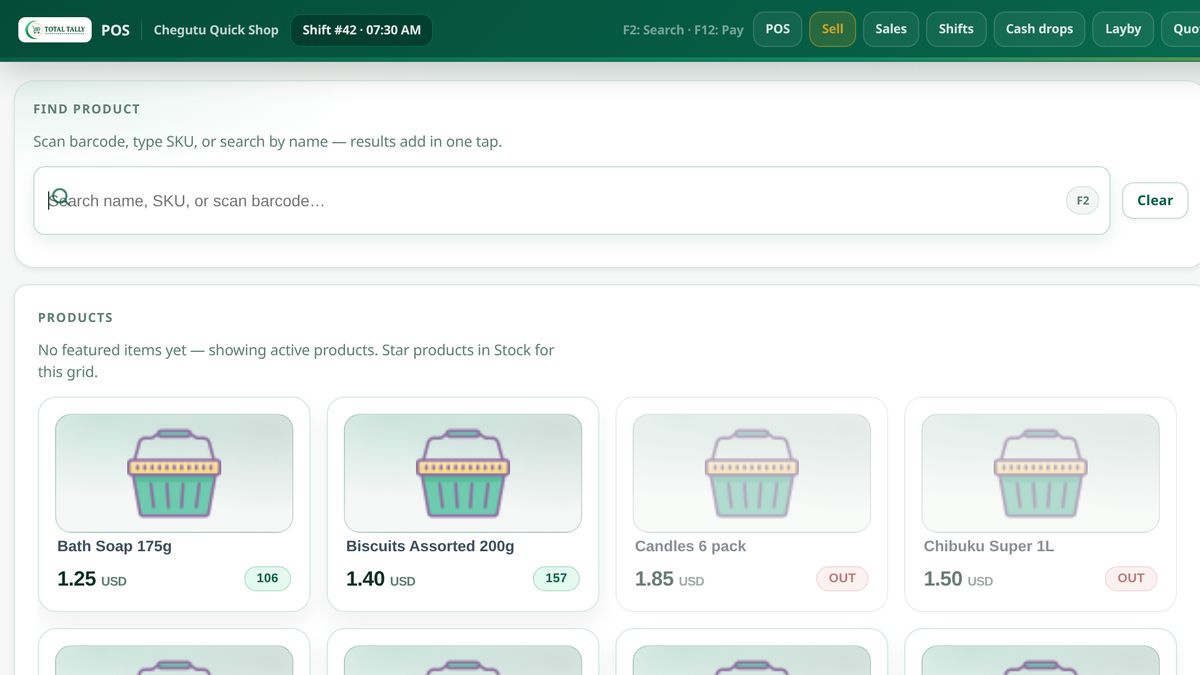
If your point-of-sale needs the internet to ring up a sale, every outage is lost revenue and a frustrated queue at the till. In a market where power and connectivity are unpredictable, a “cloud-only” POS is a liability dressed up as modern.
Offline-first, cloud-connected
The right model is offline-first: the till runs locally and never blocks a sale. Data is stored on the device and synced to the cloud automatically the moment the connection returns — so you get resilience and a live head-office view, not one or the other.
What good offline behaviour looks like
- Sell with no internet, indefinitely — when you reconnect, the same sales appear in your online portal and reports.
- Automatic, idempotent sync — no duplicate sales when connectivity flaps.
- Tamper-evident records so nothing is lost or altered in transit.
- Multi-currency and tax-inclusive pricing for local trade.
The test of a POS isn’t how it behaves online — it’s what happens the moment the internet drops mid-transaction.
That’s exactly how TotalTally POS is built: keep trading through the outage, and reconcile in the cloud afterward.
Put it into practice
Try the till on one shop, free
Sell in USD or ZiG, cash up per drawer and keep trading when the network drops. Set it up this afternoon.